

E-Commerce VS Retail Packaging Design Considerations
Why one size doesn’t fit all
Here’s something many business owners find out the hard way. Designing for e-commerce and designing for the retail shelf space require quite different approaches.
These two channels are completely different environments. Your packaging isn’t just there to look good, it has a job to do, and that job changes depending on where your product ends up. Graphic Design doesn’t exist just to make things look pretty, it requires design strategy implementation to be truly effective.
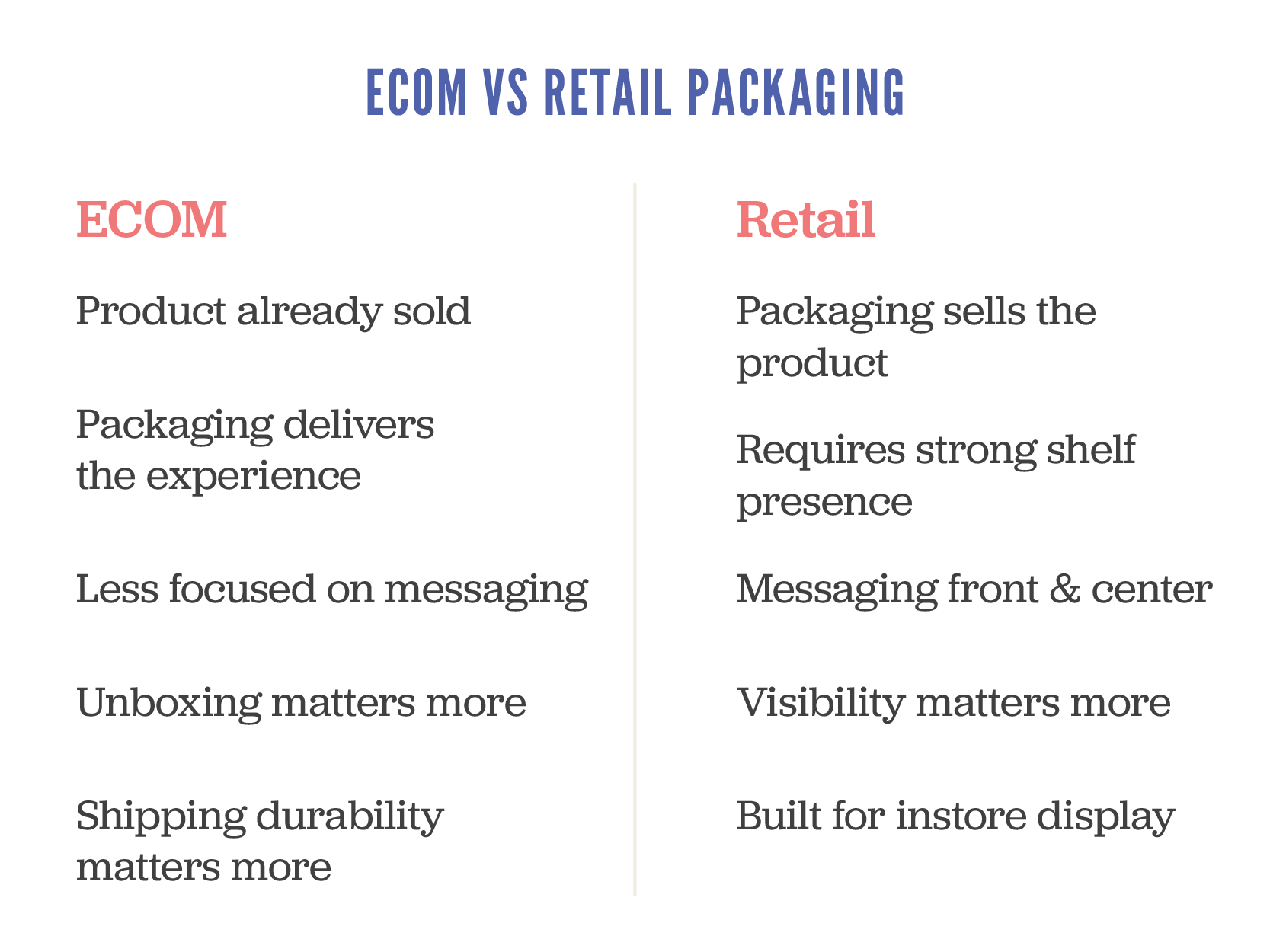
Let’s break down the key differences so you can ensure you plan accordingly and avoid costly mistakes from day one.
Firstly, your first impression works a bit differently
In-store
Your packaging is the first impression. It’s up against a sea of competitors, fighting for attention in seconds. If it doesn’t grab someone quickly, kiss goodbye to the sale, my friends.
E-commerce: The sale has already happened. Your packaging arrives after the click, making it less about persuading and more about that impression at the door. This is your chance to reinforce your brand and create a memorable unboxing moment. You’ve seen the videos on social of people raving about their purchases, take notes my friend.
The differences
In-store needs to attract attention. E-commerce needs to deliver an experience.
Secondly, your hierarchy of information needs to shift
Retail shelf packaging needs to communicate fast and clearly a number of things:
What is the product?
Who is it for?
Why should I give a shit?
What the key features of benefits are?
For online stores, the heavy lifting has already been done by your website or marketplace listing. Your packaging can afford to strip back the sell and lean into storytelling, tone of voice, and visual impact.
Avoid the common mistake of trying to cram all your retail messaging into an e-comm pack.
You’ll end up with clutter that confuses instead of converting. Consumers are lazy beings; treat them accordingly and make it simple AF.
Retail is about standing out visually, e-commerce is about pinpoint presentation
On shelf, your packaging may be stacked, lying flat, or only partially visible. It has to work from multiple angles and grab attention fast. This is where smart use of colour, layout and shape makes a real difference.
Online, you control the product photo, but your customer still interacts with the physical pack when it arrives at their door. Think about how it opens, whether it feels premium (if the price point is high on the item), and whether the structure helps protect and present the product well.
Design for the journey, not just the destination
Retail packs sit on shelves, possibly handled by a few customers. They need to be tidy and tamper-proof, but not bulletproof.
E-commerce packs go through warehouses, vans, sorting depots, and who knows what before reaching the buyer. If your packaging can’t take a few knocks, you’ll end up with broken products, refund requests, and bad reviews.
Spend the money where it matters
Retail packaging often benefits from premium finishes like foil, embossing or spot UV. I’ve made myself hoarse saying this but it really is your silent salesperson, and it needs to impress. If you disagree with that statement, then you haven’t unlocked the potential there is for your product when your packaging is designed rooted in a strategic approach. No design is done on a whim; if your designer can’t justify the ‘why’ in what they’ve presented to you, they’re not the right person to move the needle for your business.
E-commerce packaging might not need all the bells and whistles especially if the customer bins it minutes after opening. A well-designed insert, printed tissue paper, or branded seal can have more emotional impact than a fancy box.
Be strategic, not just stylish.
So what should startups do?
Start by asking this very simple question
Where is my customer encountering my product first?
If you’re selling online only, focus on the unboxing experience and protective design.
If you’re going into retail, create shelf-ready packaging with a strong disruptive visuals and clear messaging
If you’re doing both, be prepared to develop two packaging solutions, or work with a designer who can build in smart flexibility.
I’ll leave you with some parting thoughts. Good packaging isn’t just pretty. It’s a key part of your customer experience and your product’s performance.
Design for the sales channel, not just the product. Understand the difference between selling on shelf and selling at the doorstep, and design accordingly.
As a specialist packaging design agency we can help if you’re unsure on how to move forward with the decisions around your packaging. Just sing out!
Download our Packaging Guide
If you’re looking to organise packaging for your product, grab our packaging guide for tips and tricks and a handy checklist to ensure you don’t overlook anything and avoid costly mistakes and delays